How to Face Adversity without Losing Hope: Part 2
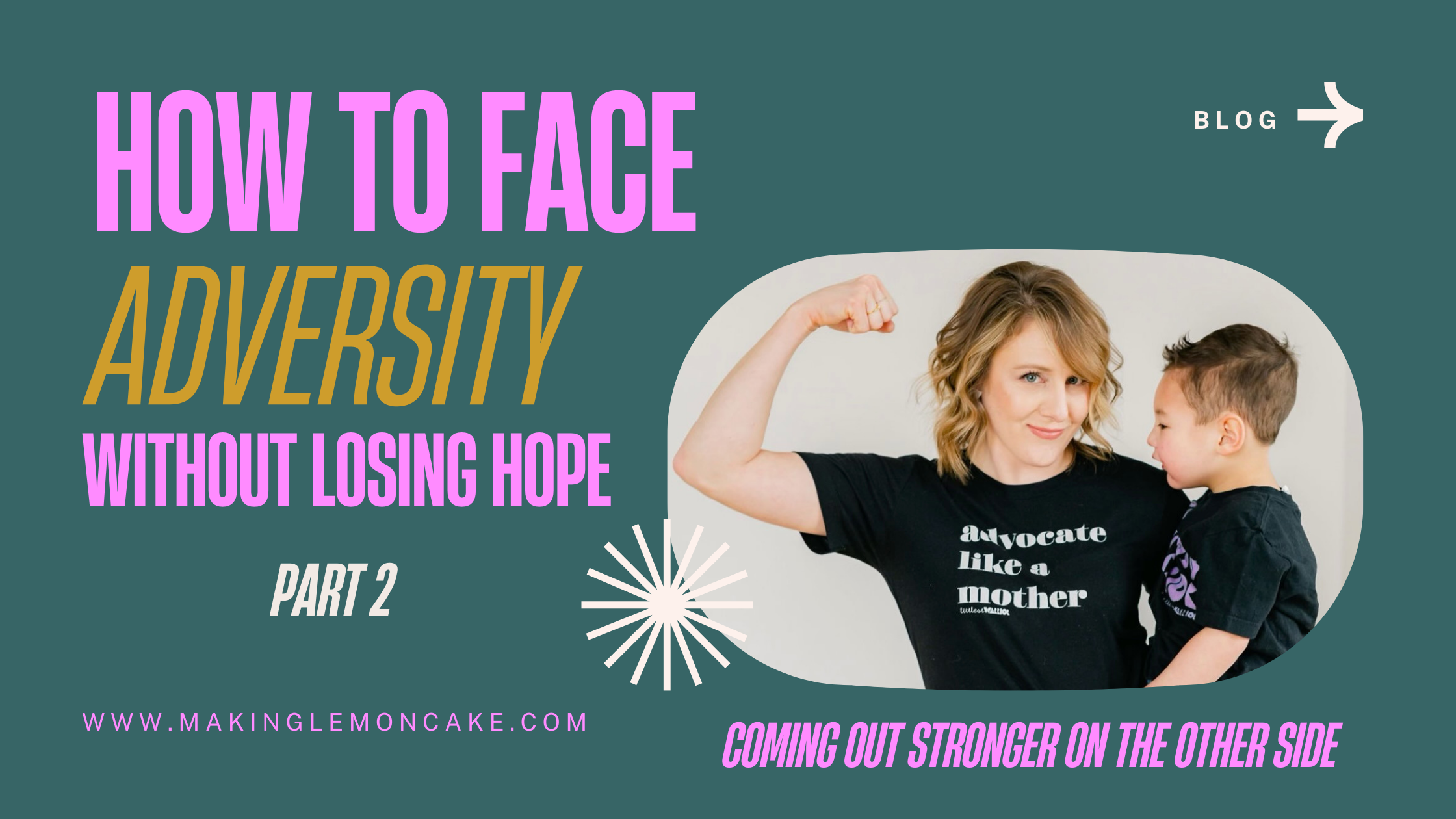
Coming Out Stronger on the Other Side of Adversity
If you’re reading this, chances are you’ve lived a life where the word “adversity” feels less like a concept and more like a companion that pops up uninvited. You know what it is to brace for impact. You know what it is to bend without breaking. And you know what it is to quietly rebuild—again and again—while the world keeps spinning like nothing happened.
But something did happen. And it shaped you in ways you probably don’t give yourself enough credit for.
Part 1 of this series named the reality: adversity changes us. So in Part 2, we’re talking about what comes after the storm, when the dust settles and you finally have space to breathe. How do you walk out of hard seasons stronger, softer, wiser, or maybe just a little more open to hope?
There are many ways we’ve learned to do that—not because we read it somewhere, but because life forced the practice. We are going to dive into three of those ways and our hope is that they might just work for you too.
1. Find the lesson, not just the loss.
Pain likes to announce itself. Lessons tend to whisper.
In the middle of a medical crisis or a season of uncertainty, it’s easy to walk away holding only the loss. It’s a challenge not to harbor upon what was taken, what changed, what can’t be undone.
But when we slow down enough to ask:
What did this teach me about who I am?
What did it reveal about who God is?
What matters now that maybe didn’t before?
…something shifts.
Loss becomes a teacher instead of a thief. Wisdom grows in places where fear once lived. And you begin to realize that your resilience isn’t accidental; it’s being formed on purpose.
You don’t have to love what you went through to learn from it. You only have to be willing to look again.
2. Turn your story into service.
One of the quiet miracles of adversity is this:
What once made you feel alone becomes the very thing that makes you a lifeline to someone else.
When you share your story, your hard-won wisdom, or your scars-in-progress, something sacred happens. Pain gets repurposed. Suffering gets redeemed. Someone else finds steady ground because you were willing to name what hurt and what healed.
You become the bridge you once needed to cross.
And here’s the truth most caregivers never hear: you already do this. Every time you comfort another mom in the waiting room. Every time you say “me too” to a stranger online. Every time you show up with advice, or tissues, or simply presence.
Your story serves—even when you don’t realize it.
3. Celebrate survival as success.
The world loves a triumphant ending, yet as caregivers, we know reality isn’t always tied up with a bow.
So let’s redefine success.
Success is getting through the day you weren’t sure you could handle.
Success is showing up again after yesterday drained you dry.
Success is finding laughter after seasons you thought might break you.
Success is choosing hope in the dark.
Success is survival.
Don’t wait for everything to be fixed, neat, or finished before you honor the strength you’re already living out. Healing is not a straight line, and neither is victory.
Sometimes the bravest thing you do is breathe, regroup, and rise again tomorrow.
That counts. More than you know.
Closing Thoughts
Adversity will change you—but it doesn’t get to define you. You are not just someone who endured; you are someone who grew. Someone who loves fiercely. Someone who walks into hospital hallways with courage. Someone who keeps choosing joy, even when it costs something.
Part 3 of this series will dig into how joy and sorrow can coexist, and why one actually deepens the other. Spoiler: the tension you feel inside you is not a flaw. It’s evidence of a heart that is very much alive.
If this series is resonating, stay close. And if you need community, Lemon Cake was built for that! We are women walking each other home one messy, beautiful chapter at a time.